
The collect prayer written for the Feast of Christina Rossetti quotes a line from her poem that would become the hymn “In the bleak midwinter,” “O God, whom heaven cannot hold.” Rossetti’s life, however, was nothing like a Christmas carol. She suffered from severe health difficulties, including a mental breakdown at age 14 while caring for her ailing father, as well as Graves’ disease and cancer. She was frequently depressed, and according to what her brother wrote about her, “was an almost constant and often a sadly-smitten invalid.”
Nevertheless, she persisted.
Rossetti wrote poetry as well as prose her whole life and was considered the heir apparent to Elizabeth Barrett Browning’s place as the premier female poet of England in the 19th century. She was a contemporary of the (now better-known) Gerard Manley Hopkins; he wrote poems in response to hers. She and her mother became involved in the Oxford Movement, influenced by social justice teachings as well as Anglo-Catholic devotion. She tried to join Florence Nightingale’s nursing work and, when turned down, set her efforts to a home for “fallen women” in London.
She never married, though not for lack of proposals. There are clearly feminist themes in her work, but apparently she was neutral (or even negative) on women’s suffrage. She wrote deeply erotic work and presented herself as celibate. She captures the beauty of human life, and also its wretchedness.

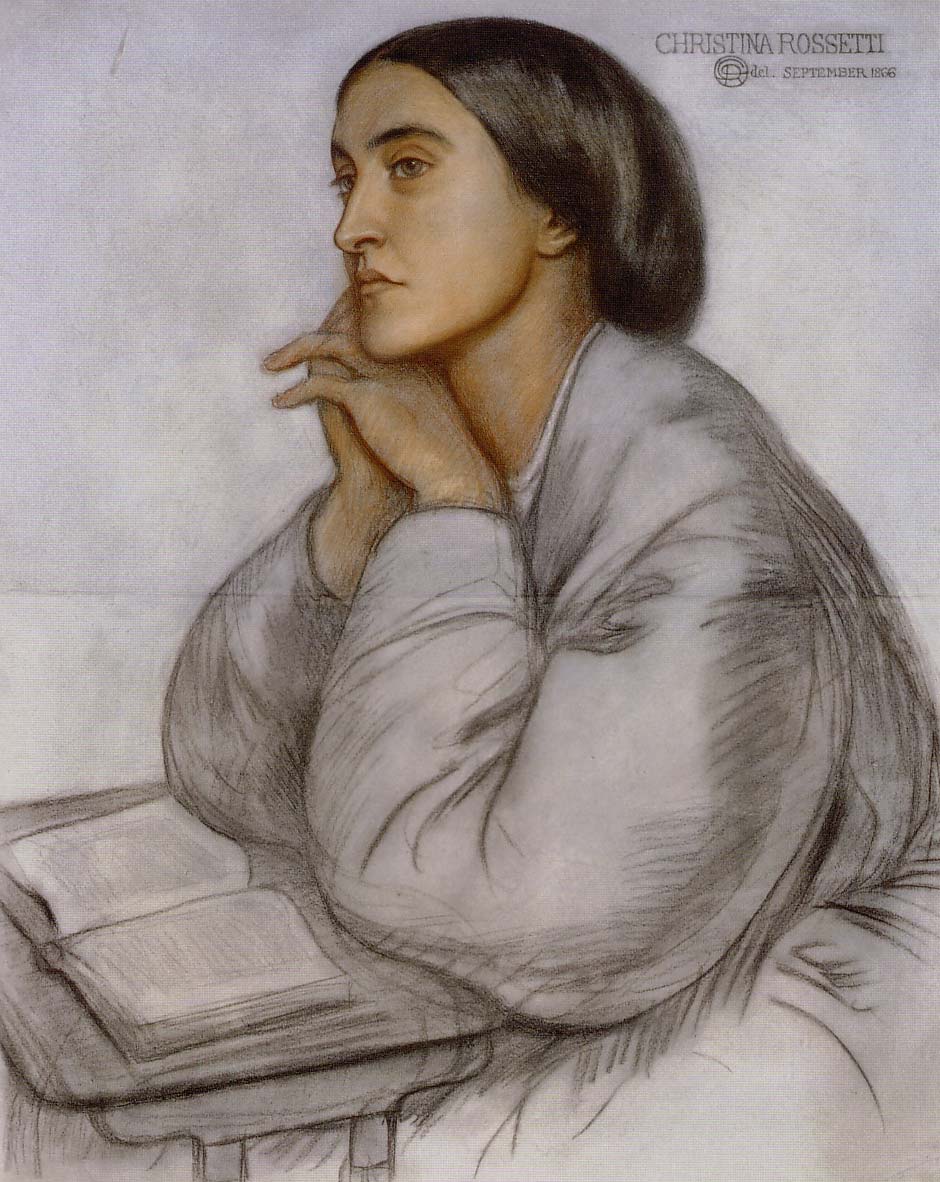
What’s striking to me about Rossetti is that she was a real person: inscrutable, challenged, challenging. She didn’t slot into neat categories of identity in her own day. And she isn’t doing that for ours, either. She will take all the contradictions, thank you very much, and refuse to be confined by anyone’s expectations.
The gift of her life and work now lives on in her writing. However inspiring her life was, this would probably have been her preference. Through her words, Rossetti continues to make space for honesty—for longing, for contradiction, for love that can be expressed in fragility as well as ferocity. And that love is not abstract for Christina Rossetti. The love described in her poem “Love came down at Christmas” is not sentimental; it’s real, embodied, and holy.
Part of her gift to us as we nurture children in faith is the reminder that we don’t have to hand them tidy answers. We can offer, instead, something truer. A faith big enough to hold joy and sorrow, doubt and devotion, beauty and brokenness.
When we sing her words each Christmas, we’re practicing that kind of faith together. We’re reminding ourselves and the children in our care that what God asks for us is not perfection, but presence. That love has already come down to meet us here. Love wants only us.
What can I give Him, poor as I am?
If I were a shepherd, I would bring a lamb;
If I were a Wise Man, I would do my part;
Yet what I can I give Him: give my heart.
—In the bleak midwinter, Hymnal 1982 #112
Discover more from Grow Christians
Subscribe to get the latest posts sent to your email.